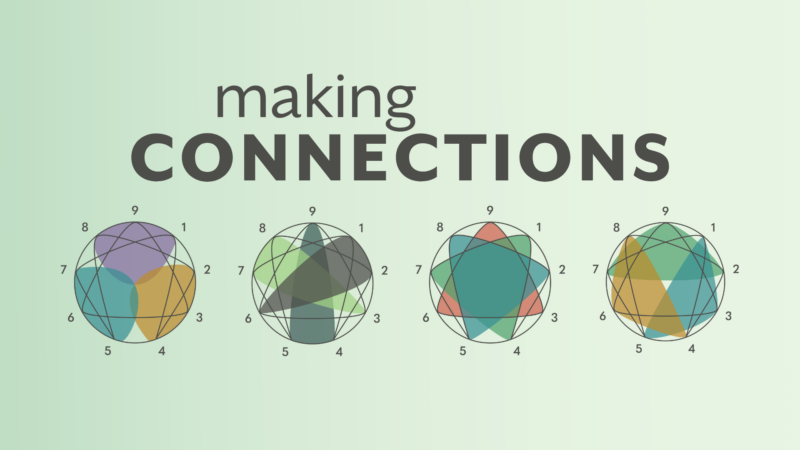
Underneath the nine Enneagram types are four sets of triads — groupings of three types that share something essential. Each triad illustrates patterns of how we gather knowledge, how we relate to others, how we handle conflict, and how we engage with the world.
These various triads have been articulated by many different authors and teachers over the years, and much of this material is drawn from their collective work. One goal of this article is to organize and describe the triads in a way that makes the information easily accessible and applicable to life and work.
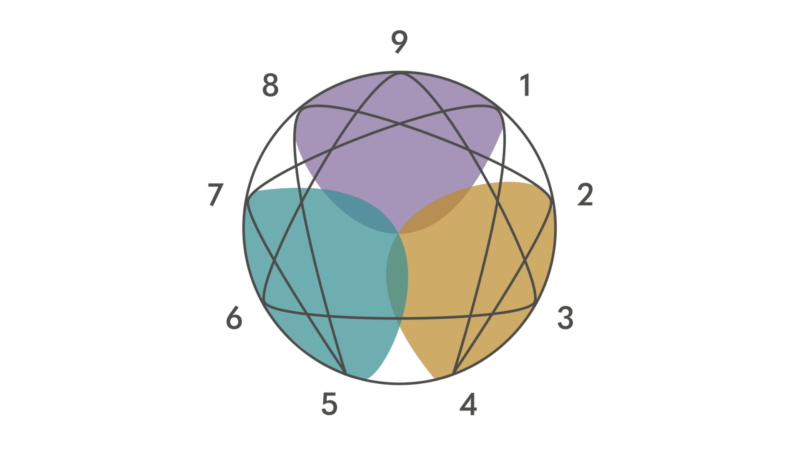
Receiving Triads: Gathering Knowledge
The most foundational triad groups types by their centers of intelligence — the filter each of us leans on most naturally to take in information, how we receive knowledge from the world around us.
- Head types (5, 6, 7) gather knowledge by thinking it through — analyzing, planning, imagining what’s ahead.
- Body types (8, 9, 1) gather knowledge through the gut — receiving information by instinct, sensation, and a felt sense of what’s right.
- Heart types (2, 3, 4) gather knowledge by feeling it — tuning into mood, connection, and feelings.
Relating Triads: Relating to Others
The second triad, traditionally called the Hornevian triads after work done by psychoanalyst Karen Horney, is about how we tend to show up in relationships with other people.
- Assertive types (3, 7, 8) lead with outward, expansive energy. They act, initiate, and make things happen.
- Withdrawn types (4, 5, 9) lead with receptive energy. They step back, observe, and process internally before engaging.
- Compliant types (1, 2, 6) lead with an energy that adjusts — neither purely active nor purely receptive, but continually calibrating to what’s needed.
Responding Triads: Navigating Conflict
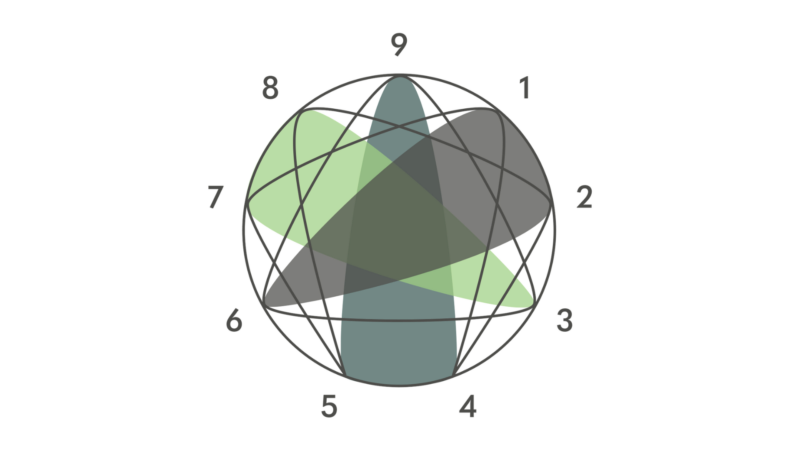
Sometimes called the harmonic triads, the third set of threes reveals our tendencies toward responding to difficult emotions and managing conflict.
- Expressing types (4, 6, 8) express themselves by voicing and intensifying feelings to be understood.
- Containing types (1, 3, 5) contain their energy by using reason and objectivity to stay steady.
- Reframing types (2, 7, 9) shift perspective toward the positive in order to make the situation feel workable.
Resonating Triads: Engaging the World
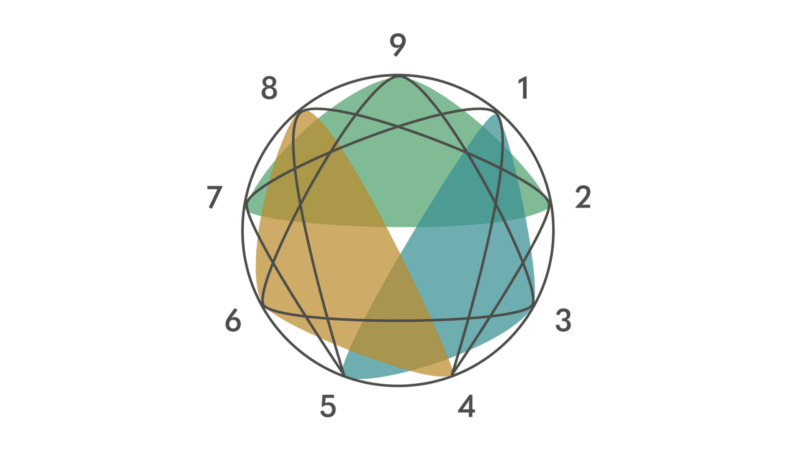
The harmony triads, a term developed by co-founder of the Narrative tradition David Daniels, encompass three equilateral triangles which allow for each type to have a connection to each center of intelligence (2s and 4s gain a connection to the head and 5s and 7s each have a line to the heart center). Helen Palmer and Marion Gilbert further developed this material using the language of power, blend, and flow to speak to patterns of how types engage with the world. (Another meaningful way to view these triads is through the lens of object relations, which is not the orientation of this article.)
- Power types (2, 5, 8) — engage energy and intensity: how much to let in, how much to hold back, and how much to let out.
- Flow types (1, 4, 7) — focus on idealization of how things ought to unfold, and what happens when reality doesn’t cooperate.
- Blend types (3, 6, 9) — work with boundaries and autonomy, seeking to stay with the self while taking in others.
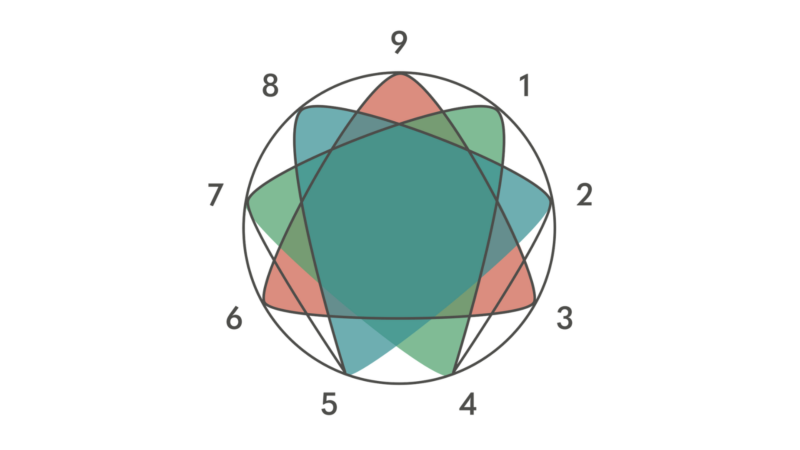
David Daniels points out that each harmony triad draws exactly one type from every category above: one Head, one Heart, one Body; one Assertive, one Withdrawn, one Compliant; one Expressing, one Containing, one Reframing.
Layer all four triads together, and each type shares a direct connection with every other type — each pairing meeting in exactly one of the four triads.
Join us for an upcoming program to learn more!
First, join us for a FREE Community Gathering on Sept. 17 at 10am Pacific with Adam Bailon to explore how understanding the Enneagram triads can help you experience a more balanced life and build a bridge with every other Enneagram type.
Second, join us on Tuesdays this October to explore these dynamics more deeply in Making Connections: Engaging the Enneagram Triads with Allison DeHart, Micky ScottBey Jones, Adam Bailon, and Christopher T. Copeland. Each week, you’ll develop a greater appreciation for the unique ways you interact with the world and engage the connections you share with every other type.